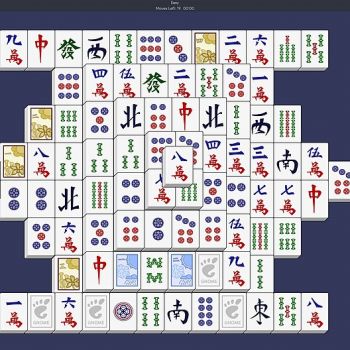
Introduction to Mahjongg Solitaire
Mahjongg Solitaire is a classic tile matching puzzle that has been enjoyed by players of many ages. The game presents a layered layout of Mahjong tiles and challenges the player to remove matching pairs until the board is cleared. Each successful match reveals tiles that were previously hidden, creating a satisfying sense of progress. The simple premise combined with a steady increase in difficulty makes the game a favorite for casual sessions and longer strategic play.
Understanding the Core Gameplay
The objective of Mahjongg Solitaire is to clear the entire board by selecting pairs of identical tiles. A tile is eligible for removal only when it is not blocked on both its left and right sides. This rule encourages the player to think ahead and plan moves that will free up additional tiles. As the game advances, the layout becomes more intricate and the number of available moves decreases, requiring careful observation.
How a Turn Unfolds
At the start of a turn the player scans the visible tiles for any that have a matching partner and are free on at least one side. Once a suitable pair is identified the player selects the two tiles, and they disappear from the board. The removal often uncovers tiles that were previously hidden, opening new possibilities for the next move. The process repeats until no more legal pairs remain or the board is completely cleared.
Key Concepts for New Players
- Focus on the edges of the layout first. Tiles on the outermost rows are usually easier to free.
- Look for tiles that appear in multiple copies across the board. Removing one pair may reveal another pair of the same type.
- Avoid removing tiles that block a large number of other tiles unless it creates a clear path for future matches.
Effective Strategies for Beginners
Developing a solid approach can dramatically improve success rates. One useful method is to prioritize tiles that have only one matching partner still on the board. Removing such pairs early prevents the situation where the last matching tile becomes inaccessible. Another tactic is to keep an eye on the topmost layer; clearing tiles from the highest level often reveals a cascade of new options.
Managing the Middle Layers
The middle layers of the layout are the most challenging because they are frequently blocked on both sides. When faced with a difficult middle section, try to create space by removing tiles from the surrounding edges. This can free a side of a blocked tile, making it eligible for removal. Patience and a willingness to backtrack on earlier choices are essential when navigating these layers.
Balancing Risk and Reward
Sometimes a tempting pair may appear that seems to offer an immediate advantage but actually locks other tiles behind it. Before committing to such a move, pause and consider the impact on surrounding tiles. If the pair is not critical, it may be wiser to explore alternative matches that keep more of the board open.
What Makes Mahjongg Solitaire Engaging
The appeal of Mahjongg Solitaire lies in its blend of simple rules and deep strategic depth. Each new layout feels fresh, and the random arrangement of tiles ensures that no two games are exactly alike. The gradual increase in difficulty keeps players motivated to improve their pattern recognition and forward planning skills. Additionally, the soothing visual design and gentle sound effects create a relaxing environment that is perfect for short breaks or extended play sessions.
Replay Value and Community Appeal
Because the tile arrangement is generated anew each time, Mahjongg Solitaire offers virtually endless replay possibilities. Players can experiment with different strategies, aiming to complete the board in fewer moves or within a limited time. The game also fits well into online gaming communities where players share high scores, discuss optimal approaches, and challenge each other to beat personal records.
Frequently Asked Questions
Is there a time limit for each game?
Mahjongg Solitaire typically does not enforce a strict time limit, allowing players to take the time they need to think through each move. Some versions may include optional timed challenges for those who enjoy a faster pace.
Can the game be played on mobile devices?
Yes, the tile matching format adapts well to touch screens, and many online platforms provide a mobile-friendly version that can be accessed from smartphones and tablets.
What should I do when no more moves are available?
If the board reaches a state where no legal pairs remain, the player can start a new game. Some platforms offer a hint feature that highlights a possible match, helping to avoid dead ends.
How can I improve my high score?
Improving a high score often involves clearing the board with the fewest possible moves. Focus on efficient pair selection, keep the board as open as possible, and practice recognizing tile patterns quickly.
Are there different tile sets or themes?
Many versions of Mahjongg Solitaire provide a variety of visual themes, ranging from traditional Chinese designs to modern abstract patterns. Changing the tile set does not affect gameplay but can enhance the visual experience.